Queer Places:
King Edward's School, Edgbaston Park Rd, Edgbaston, Birmingham B15 2UA
University of Cambridge, 4 Mill Ln, Cambridge CB2 1RZ
Rugby School, Lawrence Sheriff St, Rugby CV22 5EH, United Kingdom
Clifton College, 32 College Rd, Clifton, Bristol BS8 3JH, United Kingdom
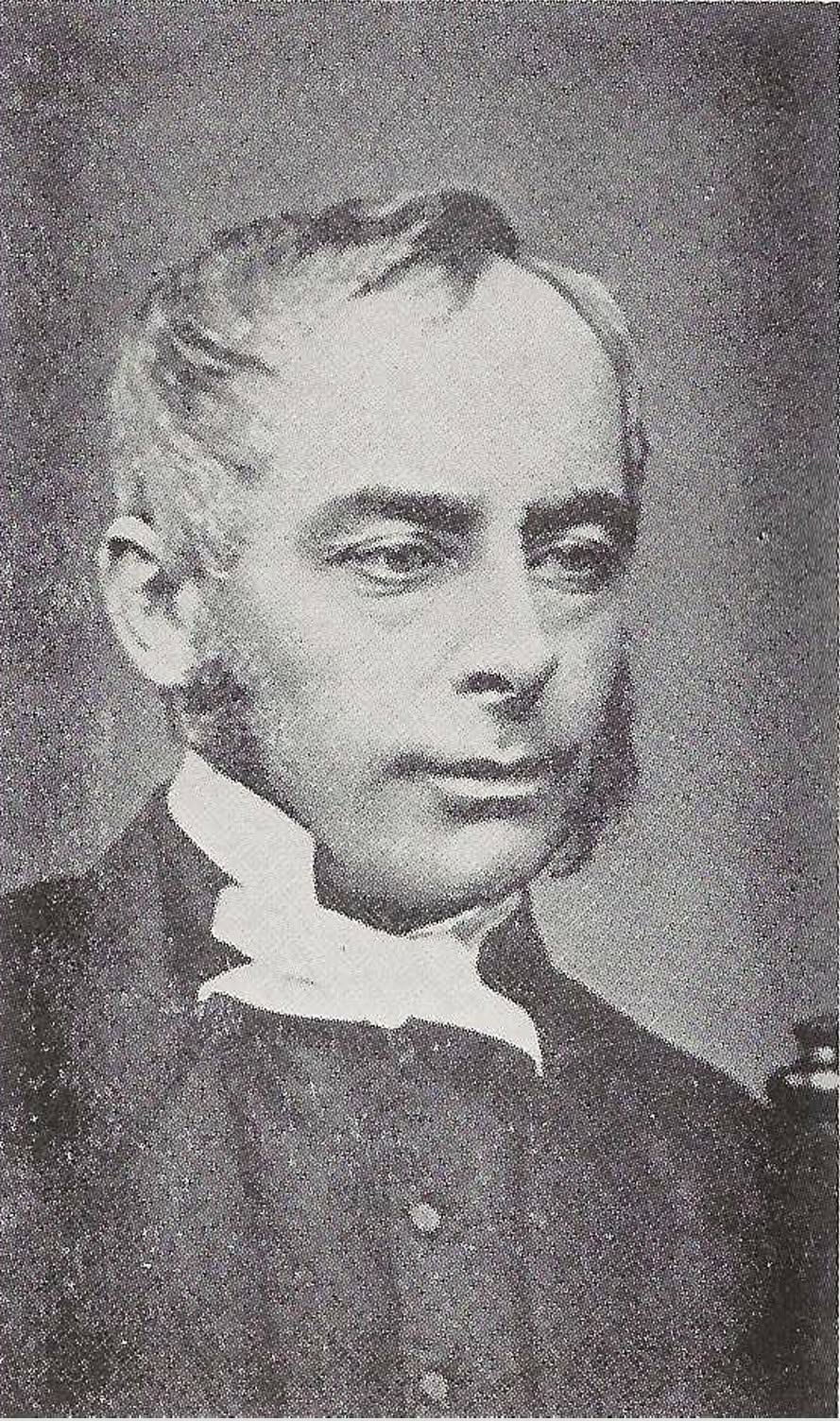 Charles Evans (January 1824 – August 18, 1904) was born in Coventry on January 1824, the son of John Southam Evans. Growing up on Little Park Street, Charles was immersed in
a prominent local family; his father established himself as a successful ribbon manufacturer while actively contributing to civic life as a bank director, church warden, and
turnpike trustee. Leveraging these strong local connections, Evans secured a recommendation to King Edward’s School, Birmingham, entering in 1838. At the time, the school
was situated on New Street within a newly erected 1835 Gothic Revival building designed by the eminent architect Charles Barry, featuring interior detailing by Augustus
Pugin.
Charles Evans (January 1824 – August 18, 1904) was born in Coventry on January 1824, the son of John Southam Evans. Growing up on Little Park Street, Charles was immersed in
a prominent local family; his father established himself as a successful ribbon manufacturer while actively contributing to civic life as a bank director, church warden, and
turnpike trustee. Leveraging these strong local connections, Evans secured a recommendation to King Edward’s School, Birmingham, entering in 1838. At the time, the school
was situated on New Street within a newly erected 1835 Gothic Revival building designed by the eminent architect Charles Barry, featuring interior detailing by Augustus
Pugin.
Thriving under the mentorship of the school's visionary Headmaster, James Prince Lee, Evans rose to the position of School
Captain. When Prince Lee moved on, Evans followed his mentor's academic orbit to Trinity College, Cambridge, being admitted on May 1, 1843.
He distinguished himself brilliantly across both the Mathematical and Classical Triposes: Scholar (1845), Craven Scholar (1846), 1st Chancellor’s Medal (1847), Senior
Classic (bracketed 1st in the 1st Class of the Classical Tripos, graduating with a BA in 1847), Fellow of Trinity College (elected and serving from 1848 to 1852; MA obtained
in 1850).
During his undergraduate and fellowship years in Cambridge, Evans was also inducted into the elite, clandestine intellectual discussion society known as the
Cambridge Apostles. He was later ordained as a deacon in 1852 and a priest in 1854.
Following his time at Cambridge, Evans began a long tenure as an Assistant Master at Rugby School (serving from 1849 to 1862), working alongside contemporary masters
under the influential tradition of Thomas Arnold.
In 1861, recognition of his leadership capabilities led to his appointment as the first Headmaster of Clifton College in Somerset. However, before taking up the
post—having worked closely with the council to plan the new institution's launch—he received an irresistible call to return to his alma mater.
In 1862, Evans resigned his post at Clifton to return to King Edward’s School, Birmingham as Headmaster, succeeding where he himself had once sat as a student alongside
future luminaries like Joseph Barber Lightfoot,
Brooke Foss Westcott, and Edward White Benson.
His decade-long tenure (1862–1872) was defined by a modernising ethos that balanced rigorous classical scholarship with progressive reforms:
Introduced formal entrance examinations, established Annual Speech Day, and deliberately integrated science into the traditional classical curriculum.
Anticipating the eventual urban encroachment and 1930s relocation of the school, he proactively purchased new playing fields on the Bristol Road.
Gained a formidable reputation as a strict disciplinarian, famously instituting Saturday detentions to curb student laxity.
Upon stepping down from King Edward’s in 1872, Evans transitioned into the church, taking up appointment as Rector and Rural Dean of Solihull (serving from 1872 to 1894)
and relocating his family from the Hermitage to the Rectory. Later, in 1874, he was named Honorary Canon of Worcester Cathedral, a post he held until his death.
Deeply committed to civic welfare and community elevation, Canon Evans:
Chaired local charities, instituting winter soup kitchens and adult reading groups to support the working classes.
Spearheaded the crucial reform and physical relocation of the local Grammar School to its new site off the Warwick Road, overseeing the construction of the striking
Gothic building that now serves as School House.
On December 29, 1852, Evans married Susannah Sarah Lee at Prestwich, Lancashire. Susannah was the younger daughter of his former headmaster, J.P. Lee, who later became
the Bishop of Manchester.
The couple had a large family of nine children. However, deep personal tragedy struck when three of their children died young; a poignant memorial window designed by the
renowned studio of Charles Eamer Kempe was dedicated to them in St Alphege’s Church in 1880. Among their surviving sons were Harold J. L. Evans (born 1876), Philip H. L.
Evans (born 1885), and William M. L. Evans (born 1893).
In his later years, Canon Evans resided at St Alphage in Parkstone, Dorset. He passed away there on August 18, 1904, at the age of 80.
Canon Charles Evans left behind a profound legacy across the West Midlands. Remembered equally as a brilliant Cambridge Classic, an uncompromising disciplinarian, a
pioneering educational reformer, and a dedicated parish priest, his imprint remains permanently fixed upon the academic institutions of Birmingham and the civic framework of
Solihull.
References:
Other references:
- Solihull Parish Magazine (specifically the May 1915 issue detailing the legacy and death of Susannah Evans).
- Solihull Life historical local features.
- The Leamington Spa Courier (e.g., the 11th May 1878 feature regarding the children's convalescent home).
- The Birmingham Post (e.g., reports from July 1883 detailing the aims and positioning of the convalescent institution).
- The Warwick County News (e.g., 2nd May 1931 edition covering operational updates and admission statistics for the Evans' Home).
- Alumni and academic records from Trinity College, Cambridge (recording his Mathematical and Classical Triposes, Senior Classic standing, BA of 1847, and Fellowship).
- Archival history documentation from King Edward’s School, Birmingham and Rugby School recording his tenure, modernization initiatives, and headmastership.
- Research publications on regional historical figures, such as The Less Well-Known Members of the Shakespeare Memorial Library’s Subscribers’ Committee (Everything to Everybody project, University of Birmingham).
Support this project
This website is a passion project researched, developed, and funded entirely by me. If you find the content valuable and would like to help support the ongoing research and hosting costs, any contribution is deeply appreciated.
Thank you for keeping this independent resource alive!
My books on Amazon: Elisa Rolle's books
BACK TO HOME PAGE
